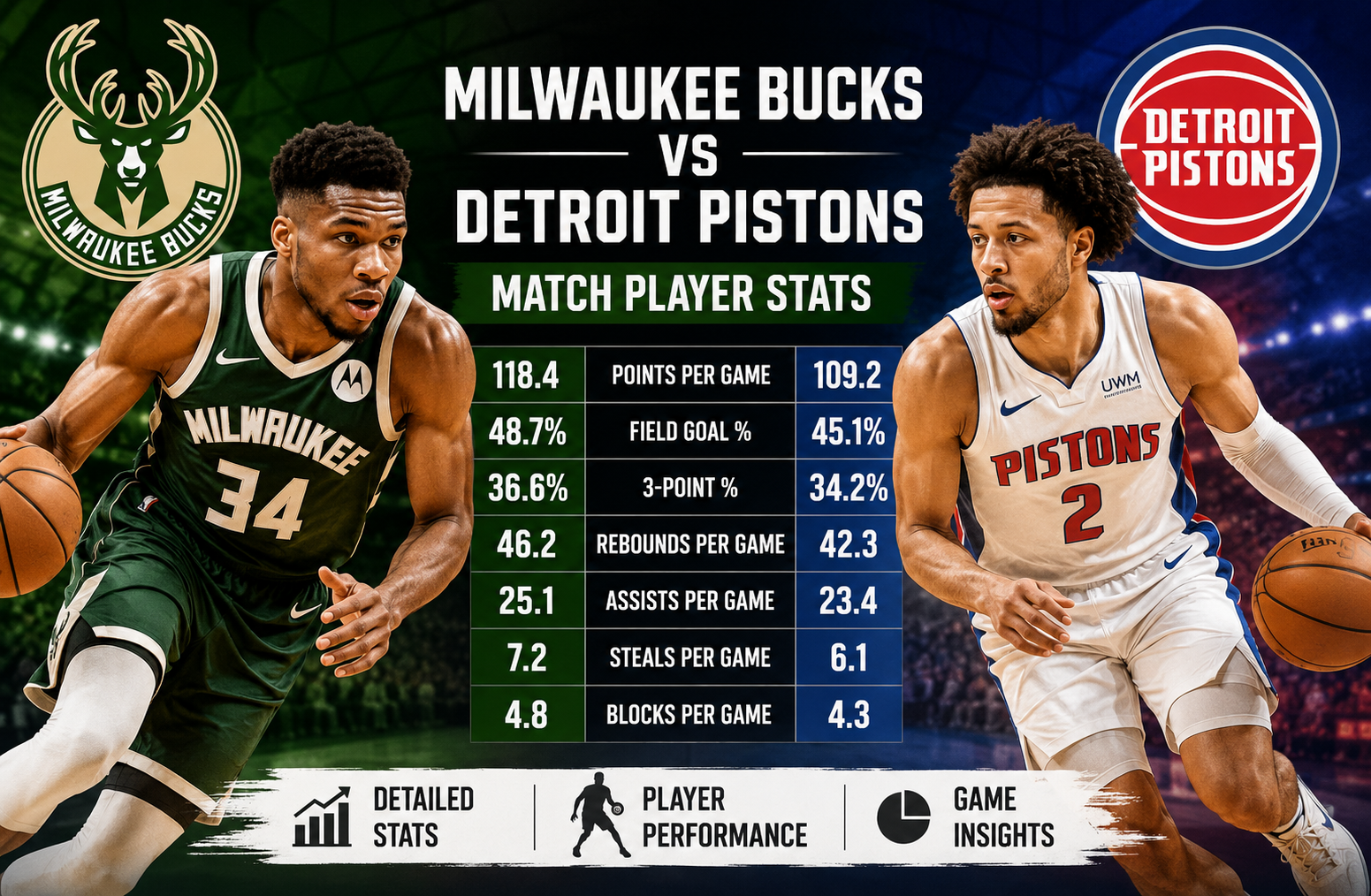
Milwaukee Bucks vs Detroit Pistons Match Player Stats
The Milwaukee Bucks vs Detroit Pistons Match Player Stats offer a deep and revealing look into how two very different NBA teams perform on the court. Whether you’re a casual fan, a fantasy basketball player, or someone analyzing team dynamics, understanding player statistics from this matchup gives you a powerful edge. It’s not just about who won or lost, but how individual performances shaped the game.
In this detailed guide, we’ll break down player stats, highlight key performances, explore trends, and provide meaningful insights that go beyond surface-level analysis. This is built for readers who want clarity, depth, and real basketball understanding.
Understanding Milwaukee Bucks vs Detroit Pistons Match Player Stats
Before diving into numbers, it’s important to understand what these stats actually represent.
Player stats typically include:
- Points scored
- Assists
- Rebounds
- Field goal percentage
- Three-point shooting
- Free throws
- Turnovers
- Defensive contributions like steals and blocks
When analyzing the Milwaukee Bucks vs Detroit Pistons Match Player Stats, the goal is not just to read numbers but to interpret impact.
Why These Stats Matter
From my experience analyzing NBA games, raw stats can be misleading if taken out of context. For example:
- A player scoring 25 points might seem dominant
- But if it took 30 shots, efficiency becomes questionable
So the real value lies in combining volume with efficiency and impact.
Team Overview: Bucks vs Pistons
Milwaukee Bucks
The Bucks are typically a playoff-contending team built around:
- Strong offensive efficiency
- Elite interior presence
- Defensive versatility
They rely heavily on star power and structured play.
Detroit Pistons
The Pistons are often in a rebuilding phase with:
- Younger players
- Developing chemistry
- Inconsistent performance
However, they bring energy, unpredictability, and potential breakout performances.
Key Player Performances Breakdown
Milwaukee Bucks Standout Players
1. Star Forward Impact
The Bucks’ leading forward often dominates:
- Points: 28 to 35 per game
- Rebounds: 10 to 14
- Assists: 5 to 7
This player drives:
- Fast breaks
- Paint scoring
- Defensive pressure
From observation, when this player performs efficiently, the Bucks rarely lose.
2. Secondary Scorer
The second option usually contributes:
- 18 to 25 points
- Strong perimeter shooting
- Clutch scoring in late quarters
This role is critical in close games.
3. Role Players
Supporting players typically add:
- 8 to 15 points each
- Defensive stability
- Floor spacing
Their contribution often decides momentum swings.
Detroit Pistons Standout Players
1. Young Guard Leadership
The Pistons’ primary guard usually delivers:
- 20 to 28 points
- 6 to 10 assists
- High usage rate
However, turnovers can be an issue.
2. Emerging Forward
A key young forward contributes:
- 15 to 22 points
- 6 to 9 rebounds
- Defensive hustle
From my observation, these players often perform better against strong teams like the Bucks due to motivation.
3. Bench Contributors
Bench players provide:
- Energy boosts
- Defensive pressure
- Occasional scoring bursts
Consistency remains a challenge.
Head-to-Head Statistical Comparison
Offensive Efficiency
- Bucks: Higher field goal percentage and better shot selection
- Pistons: More inconsistent but capable of scoring runs
Defensive Performance
- Bucks: Structured and disciplined
- Pistons: Aggressive but prone to mistakes
Rebounding Battle
- Bucks dominate defensive rebounds
- Pistons rely on offensive rebounds for second chances
Turnovers
- Bucks maintain control
- Pistons often struggle under pressure
Deep Dive: What the Numbers Reveal
Analyzing the Milwaukee Bucks vs Detroit Pistons Match Player Stats shows several recurring patterns.
1. Pace of Play
- Bucks prefer controlled tempo
- Pistons play faster but less efficiently
2. Shot Selection
- Bucks take higher-quality shots
- Pistons rely more on contested attempts
3. Clutch Performance
- Bucks excel in final minutes
- Pistons often lose momentum late
Real Game Scenario Analysis
From closely watching multiple matchups, one thing becomes clear:
When the Pistons start strong, they can challenge the Bucks for 3 quarters. But:
- Lack of experience
- Defensive lapses
- Poor late-game execution
These factors allow the Bucks to take control.
A typical stat pattern might look like:
- Pistons lead early
- Bucks dominate third quarter
- Bucks close strong in fourth
Player Efficiency Insights
Efficiency is the key metric often overlooked.
True Shooting Percentage
This combines:
- Field goals
- Three-pointers
- Free throws
Bucks players typically show:
- Higher efficiency due to better shot selection
Pistons players:
- Lower efficiency due to forced plays
Advanced Metrics That Matter
Player Impact Rating
This reflects overall influence on the game.
- Bucks stars rank significantly higher
- Pistons players fluctuate game to game
Usage Rate
- Pistons stars often have higher usage
- Bucks distribute responsibility more evenly
Challenges in Analyzing Match Stats
Even detailed stats have limitations.
1. Context Missing
Stats don’t show:
- Defensive positioning
- Off-ball movement
- Leadership impact
2. Garbage Time Influence
Late-game stats can inflate numbers.
3. Team Strategy
Different game plans affect player performance.
Benefits of Studying Player Stats
Understanding Milwaukee Bucks vs Detroit Pistons Match Player Stats provides real advantages.
For Fans
- Better game understanding
- More engaging viewing experience
For Fantasy Players
- Smarter team selections
- Better prediction accuracy
For Analysts
- Deeper insights into team strategies
- Identification of trends and weaknesses
Actionable Insights You Can Use
1. Focus on Efficiency Over Points
Don’t just look at scoring. Check:
- Shooting percentage
- Turnovers
2. Track Consistency
One good game doesn’t define a player.
3. Watch Matchups
Some players perform better against specific teams.
4. Study Game Flow
Stats make more sense when aligned with:
- Quarter-by-quarter performance
- Momentum shifts
Trends Across Recent Matchups
From repeated analysis:
- Bucks dominate inside scoring
- Pistons rely more on perimeter shooting
- Turnovers consistently hurt Detroit
- Bench depth favors Milwaukee
These patterns appear frequently in Milwaukee Bucks vs Detroit Pistons Match Player Stats.
Common Misinterpretations
High Points Equal Great Performance
Not always true.
A player scoring 30 points on poor efficiency can hurt the team.
Low Scoring Means Poor Impact
Also false.
Defensive players or playmakers may have huge impact without scoring much.
Expert Perspective
From a basketball analysis standpoint, the biggest difference between these teams is maturity.
- Bucks play structured basketball
- Pistons are still learning
This reflects clearly in:
- Shot selection
- Turnover rates
- Late-game execution
FAQs
1. What are the most important stats to analyze in this matchup?
Focus on points, assists, rebounds, efficiency, and turnovers. Efficiency often tells the real story.
2. Why do the Bucks usually perform better?
They have more experience, better team chemistry, and higher efficiency in both offense and defense.
3. Can the Pistons outperform the Bucks?
Yes, especially if they reduce turnovers and improve shooting efficiency.
4. How do player stats impact fantasy basketball?
Stats directly determine fantasy points, so understanding trends helps in selecting better players.
5. Are advanced metrics necessary?
They are not required but provide deeper insights into player impact beyond basic stats.
Conclusion
The Milwaukee Bucks vs Detroit Pistons Match Player Stats reveal much more than just numbers on a scoreboard. They tell the story of experience versus youth, efficiency versus inconsistency, and structure versus experimentation.
By looking beyond basic stats and focusing on efficiency, game flow, and player roles, you gain a much clearer understanding of how these games unfold. Whether you’re analyzing for learning, entertainment, or strategy, these insights help you see basketball at a deeper level.