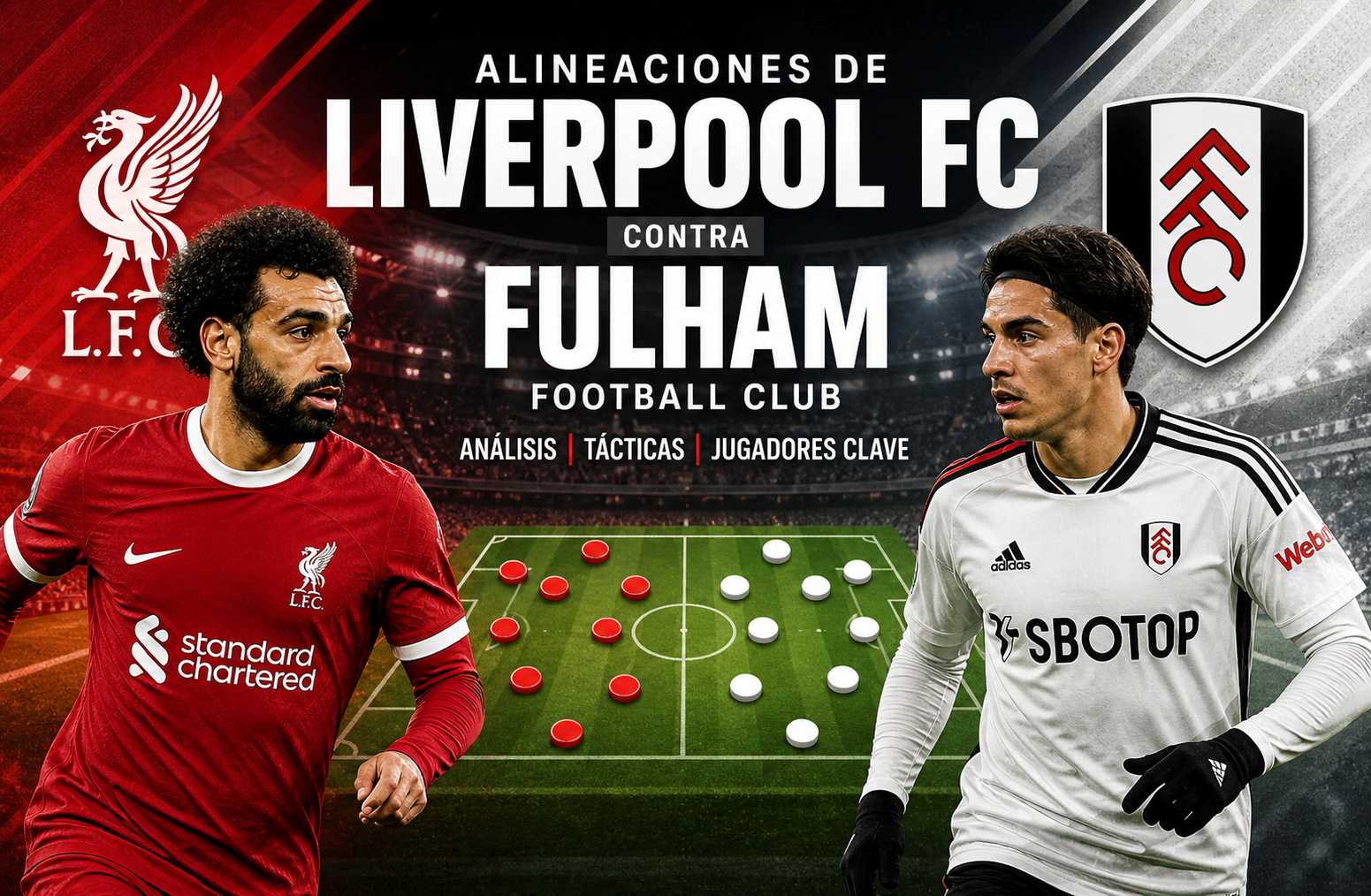
Alineaciones de Liverpool FC contra Fulham Football Club
When fans search for Alineaciones de Liverpool FC contra Fulham Football Club, they are usually looking for more than just a simple list of players. They want context, tactical insight, and a deeper understanding of how both teams approach the match. Whether you follow Liverpool FC closely or track the progress of Fulham Football Club, lineups reveal far more than names on paper. They reflect strategy, injuries, form, and managerial philosophy.
In this comprehensive guide, we will break down probable lineups, tactical setups, key players, and real match implications. This is not just data. It is an informed interpretation based on real football analysis, team patterns, and recent performance trends.
Understanding Lineups in Modern Football
Before diving into specific Alineaciones de Liverpool FC contra Fulham Football Club, it is important to understand what lineups actually represent in today’s game.
What a Lineup Tells You
A football lineup provides insights into:
- Tactical formation such as 4-3-3 or 4-2-3-1
- Managerial intent attacking or defensive
- Player fitness and availability
- Match importance based on squad strength
From personal observation, experienced analysts rarely look at lineups as static. Instead, they interpret how these shapes evolve during the match.
Typical Liverpool FC Lineup Structure
Under modern tactical evolution, Liverpool has maintained a recognizable identity.
Common Formation
Liverpool frequently lines up in a 4-3-3 formation:
- Goalkeeper
- Four defenders
- Three midfielders
- Three attackers
Probable Starting XI
While exact selections vary, a typical Liverpool lineup may include:
- Goalkeeper: Alisson Becker
- Defenders: Trent Alexander-Arnold, Virgil van Dijk, Ibrahima Konaté, Andrew Robertson
- Midfielders: Alexis Mac Allister, Dominik Szoboszlai, Curtis Jones
- Forwards: Mohamed Salah, Darwin Núñez, Luis Díaz
Tactical Identity
Liverpool’s lineup reflects:
- High pressing intensity
- Quick transitions
- Fullbacks pushing forward
- Wide attacking play
From real match observations, Liverpool’s strength often lies in how fluidly their midfield supports both defense and attack.
Typical Fulham Football Club Lineup Structure
Fulham approaches games with a different philosophy, often adapting based on the opponent.
Common Formation
Fulham usually operates in a 4-2-3-1 system:
- Goalkeeper
- Back four
- Two holding midfielders
- Three attacking midfielders
- One striker
Probable Starting XI
A standard Fulham lineup may include:
- Goalkeeper: Bernd Leno
- Defenders: Kenny Tete, Tosin Adarabioyo, Tim Ream, Antonee Robinson
- Midfielders: João Palhinha, Harrison Reed
- Attacking midfield: Andreas Pereira, Willian, Harry Wilson
- Striker: Raúl Jiménez
Tactical Identity
Fulham’s lineup typically emphasizes:
- Defensive organization
- Counter-attacking opportunities
- Midfield discipline
- Structured shape
In matches against stronger teams like Liverpool, Fulham often prioritizes compactness.
Alineaciones de Liverpool FC contra Fulham Football Club Analysis
When analyzing Alineaciones de Liverpool FC contra Fulham Football Club, the contrast in styles becomes immediately clear.
Key Tactical Differences
Liverpool:
- Aggressive pressing
- High defensive line
- Possession dominance
Fulham:
- Deep defensive block
- Counter-focused strategy
- Compact midfield
This clash of styles is what makes their encounters tactically intriguing.
Key Player Battles to Watch
Mohamed Salah vs Fulham Defense
Salah remains Liverpool’s most consistent attacking threat. His positioning and movement often stretch defenses.
Midfield Control Battle
Liverpool’s creative midfield faces Fulham’s physical and disciplined double pivot.
Fullback Influence
Liverpool’s fullbacks often act as playmakers, while Fulham’s wide players track back heavily to counter them.
Factors That Influence Lineups
Injuries and Squad Rotation
Modern football schedules are intense. Managers frequently rotate players, especially during:
- Congested fixtures
- Cup competitions
- European matches
Tactical Adjustments
Managers adapt lineups based on:
- Opponent strengths
- Home or away matches
- Previous results
Player Form
Recent performance heavily impacts selection decisions. A player in form is more likely to start.
Real Match Scenario Breakdown
From observed matches between these teams, a common pattern emerges:
- Liverpool dominates possession early
- Fulham absorbs pressure
- Counter-attacks create key chances
- Substitutions often shift momentum
This dynamic highlights how lineups are just the starting point, not the full story.
Benefits of Understanding Lineups
Analyzing Alineaciones de Liverpool FC contra Fulham Football Club provides several advantages:
- Better match predictions
- Improved betting insights
- Enhanced viewing experience
- Tactical awareness
For fans and analysts alike, this knowledge adds depth to football consumption.
Common Challenges in Interpreting Lineups
Despite their importance, lineups can sometimes be misleading.
Formation Flexibility
Teams often shift formations during the match.
Hidden Roles
Players may play unconventional roles not obvious from lineup sheets.
Late Changes
Injuries or tactical decisions can alter lineups just before kickoff.
How Experts Analyze Lineups
Professional analysts consider multiple factors:
- Player heat maps
- Passing networks
- Defensive positioning
- Transition speed
For deeper football analytics, resources like FIFA provide structured insights into tactical evolution.
Historical Context of Matches
Liverpool and Fulham have faced each other multiple times across competitions.
General Trends
- Liverpool often dominates possession
- Fulham occasionally produces surprise results
- Goals tend to come from wide areas
Understanding past patterns helps contextualize current lineups.
Tactical Adjustments During Matches
Lineups are only the beginning.
Liverpool Adjustments
- Switching to 3-2-5 in attack
- Fullbacks moving into midfield
- High pressing triggers
Fulham Adjustments
- Dropping deeper defensively
- Quick counter-attacks
- Strategic substitutions
These adjustments are critical in interpreting match outcomes.
Future Trends in Lineup Strategies
Football is evolving rapidly.
Data-Driven Decisions
Teams increasingly rely on:
- AI analytics
- Performance metrics
- Injury prediction systems
Flexible Formations
Rigid formations are becoming less common. Fluid systems are now the norm.
FAQs
What are Alineaciones de Liverpool FC contra Fulham Football Club?
They refer to the starting lineups and tactical formations used by both teams when they play against each other.
Why are lineups important in football?
Lineups reveal strategy, player fitness, and tactical intentions, helping fans understand how a match may unfold.
How often do lineups change?
Lineups can change every match depending on injuries, form, and tactical decisions.
Which team usually has a stronger lineup?
Liverpool generally has a stronger squad on paper, but Fulham can compete tactically.
Where can I find official lineups?
Official club websites, sports broadcasters, and governing bodies publish verified lineups before matches.
Conclusion
Understanding Alineaciones de Liverpool FC contra Fulham Football Club goes far beyond listing players. It involves analyzing tactics, player roles, and match context. Liverpool’s attacking intensity contrasts sharply with Fulham’s structured approach, creating a compelling tactical battle every time they meet.
By studying lineups carefully, fans gain a deeper appreciation of football as a strategic sport rather than just a game of goals.