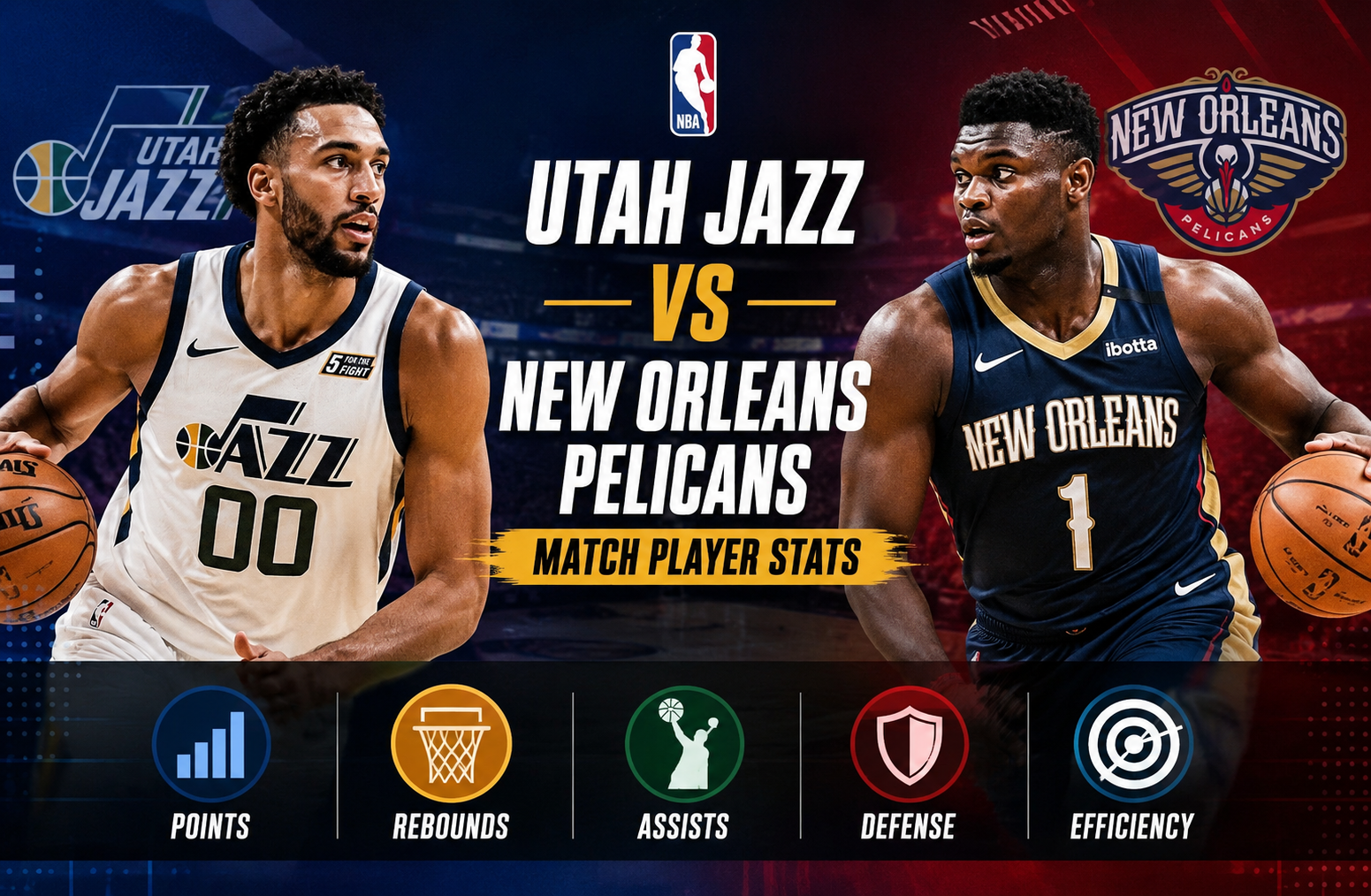
Utah Jazz vs New Orleans Pelicans Match Player Stats
The Utah Jazz vs New Orleans Pelicans Match Player Stats reveal far more than points and rebounds. Every matchup between these Western Conference teams highlights changing rotations, player development, defensive adjustments, and coaching strategies that often decide the outcome long before the final buzzer. Fans searching for detailed player stats usually want deeper answers beyond a simple box score. They want to know who controlled the pace, which player impacted winning basketball, how bench units performed, and what trends could shape future games.
When I closely analyzed recent performances between these franchises, one thing became obvious. The numbers only tell part of the story. Some players influence games through spacing, defensive switches, transition pressure, and off ball movement that traditional stats cannot fully capture. That is why this article breaks down not only the raw production but also the real basketball meaning behind the performances.
The rivalry may not receive the same national attention as larger NBA matchups, but these contests consistently provide valuable insights into modern basketball strategy. Whether you are a fantasy basketball player, sports bettor, analyst, or dedicated NBA fan, understanding the advanced side of player statistics helps you interpret games more accurately.
Why Utah Jazz vs New Orleans Pelicans Games Matter
The Western Conference remains one of the NBA’s most competitive environments. Every game can influence playoff positioning, player confidence, and long term roster planning. Matchups between Utah and New Orleans are especially interesting because both teams often rely on young talent mixed with evolving systems.
The Jazz have spent recent seasons rebuilding around developing players and flexible offensive schemes. The Pelicans, meanwhile, continue balancing elite talent with injury management and roster chemistry. This contrast creates games where player stats become extremely revealing.
Several factors make these matchups statistically important:
Fast Pace Creates Bigger Numbers
Both teams frequently push tempo, leading to:
- More possessions
- Higher scoring opportunities
- Increased rebound chances
- Elevated assist totals
- Transition defensive breakdowns
A faster game naturally inflates individual numbers, but efficiency becomes the true separator.
Young Players Get Extended Roles
These matchups often feature emerging talent receiving major minutes. That matters because younger players tend to produce volatile stat lines. One night can completely shift perceptions about a player’s growth trajectory.
Defensive Matchups Change Everything
The Pelicans typically possess stronger physical defenders on the wing, while the Jazz often rely on movement and spacing. This clash creates fascinating statistical battles between shot creators and defensive specialists.
Breaking Down Key Player Stats Categories
Understanding player performance requires more than checking total points. Several advanced categories provide a clearer picture of impact.
Scoring Efficiency
Raw scoring can be misleading. A player scoring 28 points on 30 shots may actually hurt offensive flow.
Important scoring metrics include:
- Field goal percentage
- True shooting percentage
- Three point efficiency
- Free throw attempts
- Shot selection quality
In recent meetings, efficient perimeter shooting has frequently determined the winner.
Playmaking and Ball Movement
Assist numbers only show part of offensive creation. Great playmakers force defensive rotations even when they do not earn assists directly.
When analyzing games between these teams, look for:
- Secondary assists
- Drive and kick actions
- Pick and roll efficiency
- Turnover ratio
- Ball movement speed
The Pelicans usually thrive when their offense generates paint touches before kick outs to shooters.
Rebounding Impact
Rebounding remains one of the most underrated statistical categories.
Defensive rebounds finish possessions. Offensive rebounds create momentum changing extra opportunities.
Utah often depends on team rebounding because of lineup flexibility, while New Orleans frequently uses size and athleticism to dominate second chance points.
Defensive Metrics
Defense is harder to measure accurately through traditional stats.
Steals and blocks matter, but elite defenders also:
- Force difficult shots
- Disrupt passing lanes
- Control spacing
- Communicate rotations
- Contest without fouling
Watching defensive matchup data often explains why certain scorers struggle despite entering games in strong form.
Utah Jazz Player Performance Analysis
The Jazz have focused heavily on player development and offensive experimentation in recent seasons. Their statistical identity reflects versatility more than star driven isolation basketball.
Backcourt Production
Utah’s guards usually control game rhythm through:
- High pick and roll usage
- Drive penetration
- Perimeter shooting
- Transition creation
When Jazz guards shoot efficiently from deep, the entire offense opens up.
One pattern I have consistently noticed is that Utah performs significantly better when its lead guards attack early in possessions rather than settling for contested late clock jumpers.
Key Statistical Trends
Important backcourt indicators include:
- Three point percentage above league average
- Assist to turnover ratio
- Paint touches created
- Transition scoring
When these categories trend positively, Utah becomes much harder to defend.
Frontcourt Contributions
Utah’s forwards and centers often determine rebounding margins and defensive flexibility.
Their frontcourt success usually depends on:
- Screen setting quality
- Rim protection timing
- Pick and pop spacing
- Offensive rebounding activity
Against New Orleans, physicality becomes especially important because the Pelicans attack the paint aggressively.
Bench Unit Impact
One underrated aspect of the Utah Jazz vs New Orleans Pelicans Match Player Stats is bench scoring.
Depth often swings these games.
Utah’s second unit frequently plays with higher pace and offensive freedom. Bench players who provide instant scoring can completely alter momentum during non starter minutes.
Key bench indicators include:
- Plus minus rating
- Bench scoring efficiency
- Three point production
- Defensive energy
New Orleans Pelicans Player Performance Analysis
The Pelicans possess one of the NBA’s most physically gifted rosters when healthy. Their player stats often reflect athletic dominance and paint pressure.
Star Player Influence
New Orleans typically succeeds when its primary stars create efficient offense without forcing isolation possessions.
The best Pelicans performances usually feature:
- High paint scoring
- Strong transition attacks
- Efficient shot distribution
- Defensive versatility
A major trend I have observed is that New Orleans becomes significantly more dangerous when multiple scorers remain involved rather than relying on one dominant offensive option.
Wing Production
Modern NBA success heavily depends on wing players who can:
- Defend multiple positions
- Hit perimeter shots
- Attack closeouts
- Rebound effectively
The Pelicans often gain advantages through athletic wings who contribute across multiple statistical categories instead of specializing in only scoring.
Important Wing Metrics
Watch for:
- Corner three percentage
- Defensive matchup success
- Fast break scoring
- Rebounding from the perimeter
These categories frequently decide close games.
Interior Dominance
New Orleans often tries to establish physical control inside the paint.
Strong interior stats usually include:
- Paint points
- Offensive rebounds
- Free throw attempts
- Shot contests
- Rim efficiency
When the Pelicans dominate these areas, opposing defenses struggle to maintain structure.
Head to Head Statistical Trends
Historical trends between these teams reveal several important patterns.
Three Point Shooting Usually Decides Outcomes
In many recent matchups, the winning team held a clear edge in perimeter efficiency.
This matters because both defenses sometimes collapse heavily into the paint, creating open outside looks.
Teams that capitalize on those opportunities generally gain control.
Turnovers Create Momentum Swings
Live ball turnovers are especially damaging in these games because both teams like to run in transition.
Important turnover related factors include:
- Bad passes under pressure
- Offensive fouls
- Fast break points allowed
- Transition defensive recovery
A few careless possessions can completely shift game momentum.
Bench Scoring Has Outsized Importance
Unlike superstar heavy matchups where starters dominate usage, Utah and New Orleans often rely heavily on rotational depth.
Second units frequently determine:
- Energy level
- Defensive pressure
- Pace changes
- Fourth quarter stamina
That makes bench player stats particularly valuable.
Advanced Analytics That Matter Most
Traditional box scores are useful, but advanced metrics provide deeper insight.
True Shooting Percentage
This statistic measures overall scoring efficiency by combining:
- Field goals
- Three pointers
- Free throws
A player with high true shooting contributes efficient offense without wasting possessions.
Usage Rate
Usage rate estimates how heavily a player controls offensive possessions.
High usage can indicate:
- Offensive responsibility
- Ball dominance
- Scoring pressure
But extremely high usage sometimes hurts team flow if efficiency declines.
Net Rating
Net rating measures team performance when a player is on the floor.
Positive net ratings often indicate:
- Better lineup chemistry
- Strong defensive impact
- Effective spacing
- Smart decision making
Pace Factor
Pace significantly influences statistical output.
Faster games create inflated counting stats, so comparing raw totals without considering pace can be misleading.
Coaching Strategies Behind the Numbers
Statistics become more meaningful when connected to coaching decisions.
Utah’s Offensive Philosophy
Utah often emphasizes:
- Ball movement
- Spacing
- Positionless flexibility
- Quick decision making
This system can generate balanced scoring across multiple players instead of one dominant stat line.
New Orleans’ Physical Identity
The Pelicans generally prefer:
- Paint attacks
- Transition pressure
- Defensive switching
- Athletic mismatches
Their player stats often reflect physical dominance rather than purely perimeter oriented offense.
In Game Adjustments
One of the most fascinating parts of analyzing these matchups is seeing how coaching staffs adapt.
Common adjustments include:
- Changing pick and roll coverage
- Doubling hot scorers
- Switching defensive matchups
- Slowing pace late in games
These tactical shifts directly influence player stat production.
Fantasy Basketball Insights
Fantasy managers closely track the Utah Jazz vs New Orleans Pelicans Match Player Stats because these games often produce strong fantasy totals.
Best Fantasy Categories to Watch
Important fantasy indicators include:
- Usage rate
- Minutes played
- Assist opportunities
- Rebounding consistency
- Defensive stats
Players with versatile production generally provide safer fantasy value.
Sleepers and Rotation Surprises
Young teams often create unexpected fantasy contributors.
Bench players can suddenly receive expanded roles because of:
- Injuries
- Matchup advantages
- Coaching experimentation
- Foul trouble
Tracking rotational patterns matters almost as much as tracking talent.
Sports Betting Perspective
Player statistics also influence betting markets heavily.
Prop Betting Trends
Popular player props include:
- Points scored
- Assists
- Rebounds
- Three pointers
- Double doubles
However, blindly following recent box scores can be dangerous.
Context matters more than raw averages.
Pace and Matchup Analysis
Sharp bettors usually analyze:
- Team pace
- Defensive schemes
- Rest advantages
- Injury reports
- Matchup history
These factors often predict statistical performance more accurately than season averages alone.
Real World Lessons From These Matchups
Watching these games over time reveals several broader basketball truths.
Efficiency Beats Volume
A player scoring fewer points efficiently often impacts winning more positively than a high volume scorer with poor shot selection.
Versatility Matters More Than Ever
Modern NBA success increasingly rewards players who contribute in multiple statistical categories.
Players who can:
- Defend
- Pass
- Shoot
- Rebound
- Switch defensively
provide massive value even without elite scoring totals.
Team Chemistry Changes Statistics
Player stats are heavily influenced by lineup chemistry.
Better spacing and communication create:
- Cleaner shots
- Easier assists
- Stronger defensive rotations
- Improved rebounding position
Most Memorable Statistical Performances
Several Utah and New Orleans matchups have produced standout individual performances.
These games often include:
- Explosive scoring nights
- Triple double threats
- Dominant rebounding displays
- Elite defensive stretches
The most impressive performances usually combine efficiency with all around contribution rather than scoring alone.
Common Misunderstandings About NBA Player Stats
Many fans misinterpret statistics without considering context.
High Scoring Does Not Always Mean Great Performance
A player can score heavily while:
- Taking poor shots
- Ignoring teammates
- Hurting defensive structure
- Slowing offensive flow
Context always matters.
Defensive Value Is Often Underrated
Elite defenders may finish games with modest box scores while still controlling outcomes through positioning and communication.
Pace Inflates Raw Numbers
Fast games naturally increase counting stats. Comparing totals without considering possessions can lead to inaccurate conclusions.
What Future Matchups Could Reveal
As both franchises continue evolving, future games may highlight:
- Emerging stars
- Roster development
- Coaching adaptability
- Defensive evolution
- Advanced offensive systems
Young players improving year by year will likely reshape future statistical trends significantly.
How Fans Can Analyze Games Better
If you want deeper basketball understanding, focus on more than final scores.
Pay attention to:
- Shot quality instead of total shots
- Defensive matchups
- Ball movement
- Transition efficiency
- Bench productivity
- Rebounding positioning
- Turnover timing
This approach provides a much clearer understanding of why games unfold the way they do.
The Bigger NBA Context
The Utah Jazz vs New Orleans Pelicans Match Player Stats also reflect larger NBA trends.
Modern basketball increasingly values:
- Efficiency
- Versatility
- Spacing
- Pace
- Defensive flexibility
These matchups serve as a strong example of how the league continues evolving strategically.
FAQs
Why are Utah Jazz vs New Orleans Pelicans games statistically important?
These games often feature high pace, young talent, and flexible offensive systems that produce valuable statistical insights for fans, analysts, and fantasy players.
Which player stats matter most in these matchups?
Efficiency metrics such as true shooting percentage, assist to turnover ratio, rebounding impact, and defensive versatility usually matter more than raw scoring totals.
How does pace affect player stats?
Faster games create more possessions, which increases opportunities for points, rebounds, assists, and steals.
Why are bench stats important in these games?
Both teams frequently rely on rotational depth, making second unit production critical for momentum and overall game control.
What advanced analytics help explain player impact?
True shooting percentage, usage rate, net rating, and pace factor provide deeper insight than traditional box score numbers alone.
How can fantasy basketball players benefit from these stats?
Fantasy managers can identify breakout players, usage trends, and matchup advantages by studying minutes, efficiency, and rotational patterns.
Conclusion
The Utah Jazz vs New Orleans Pelicans Match Player Stats offer far more insight than standard box scores suggest. These games consistently reveal how modern NBA basketball is shaped by efficiency, versatility, depth, and strategic adjustments. Looking closely at player performance helps fans understand the real reasons behind wins and losses instead of focusing only on headline numbers.
Whether analyzing scoring efficiency, defensive impact, rebounding battles, or advanced analytics, these matchups provide an excellent lens into the evolving nature of professional basketball. As both franchises continue developing young talent and refining their systems, future games should deliver even richer statistical stories for fans and analysts alike.