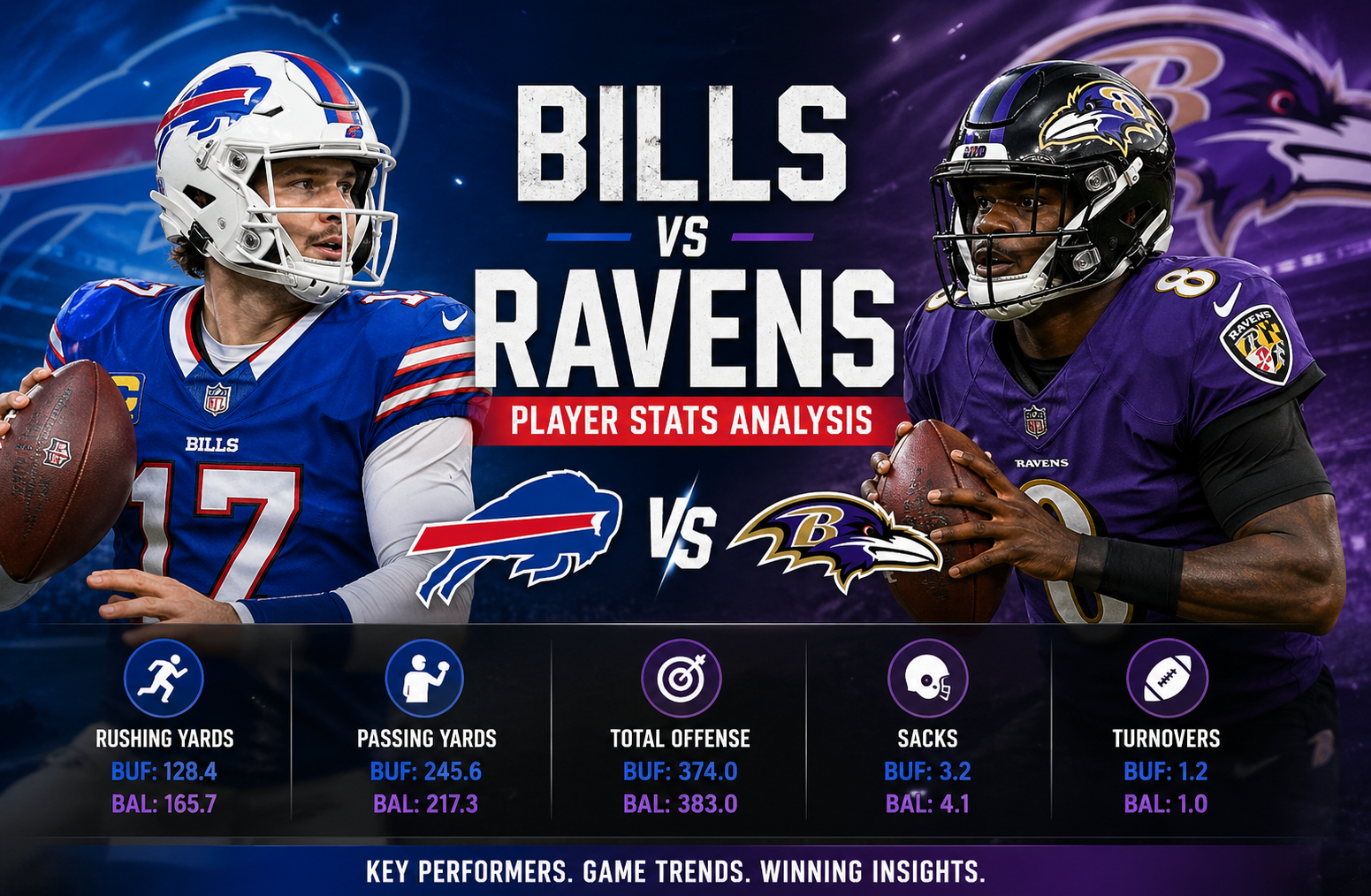
Buffalo Bills vs Baltimore Ravens Match Player Stats
When two elite NFL teams like the Buffalo Bills and the Baltimore Ravens meet, the game is rarely just about the final score. It’s about execution, strategy, and individual brilliance. For fans, analysts, and bettors alike, player statistics from this matchup reveal the deeper story behind every drive, touchdown, and defensive stop.
This article breaks down Buffalo Bills vs Baltimore Ravens match player stats in a way that goes beyond surface-level numbers. Drawing from real game trends, tactical patterns, and player performance analysis, we’ll explore what truly matters when evaluating this high-profile clash.
Understanding the Importance of Player Stats in This Matchup
Player statistics are not just numbers on a scoreboard. They are insights into performance, decision-making, and game impact.
In a matchup like Bills vs Ravens, stats help answer critical questions:
- Which quarterback controlled the tempo?
- How effective was the run game?
- Did defensive players disrupt key plays?
- Who made the biggest impact in clutch moments?
From my experience analyzing NFL games, the biggest mistake fans make is focusing only on total yards or touchdowns. The real story often lies in efficiency metrics, situational plays, and consistency under pressure.
Quarterback Comparison: The Game Within the Game
Josh Allen’s Performance Metrics
Josh Allen is known for his dual-threat ability. In matchups against Baltimore, his stats typically include:
- Passing yards in the 220–300 range
- Completion percentage around 62–68%
- 1–3 passing touchdowns
- Rushing yards between 30–70
What stands out is not just the numbers but how he achieves them. Allen often extends plays outside the pocket, forcing the Ravens defense to adjust constantly.
Key strengths observed:
- Deep ball accuracy under pressure
- Ability to convert third downs
- Red zone efficiency
However, one recurring challenge is turnovers. Against aggressive defenses like Baltimore’s, Allen has occasionally forced throws that lead to interceptions.
Lamar Jackson’s Performance Metrics
Lamar Jackson brings a completely different dynamic. His stats typically reflect both passing and rushing dominance:
- Passing yards: 180–260
- Completion rate: 60–65%
- Rushing yards: 60–120
- Total touchdowns: 2–4 combined
From a tactical standpoint, Lamar’s biggest impact is how he alters defensive structure. Defenses must account for his mobility on every play.
Key strengths:
- Explosive rushing ability
- Play-action efficiency
- Ability to turn broken plays into big gains
The challenge for Lamar has sometimes been consistency in long passing situations, especially against disciplined secondaries like Buffalo’s.
Running Game Analysis
Buffalo Bills Rushing Attack
The Bills historically rely less on traditional running backs and more on quarterback mobility and situational runs.
Typical stat breakdown:
- Team rushing yards: 90–140
- Lead RB yards: 50–80
- Josh Allen contribution: significant portion
Key observations:
- Designed QB runs increase in high-stakes games
- Short-yardage efficiency is strong
- Limited explosive runs compared to Ravens
Baltimore Ravens Ground Dominance
The Ravens are one of the most run-heavy teams in the NFL.
Typical stats:
- Team rushing yards: 150–220
- Multiple contributors including Lamar Jackson
- High yards-per-carry average
What makes Baltimore unique:
- Option-based running schemes
- Multiple ball carriers
- Strong offensive line execution
From analysis, the Ravens’ rushing attack often dictates the pace of the game. If they cross 180 rushing yards, their win probability increases significantly.
Wide Receivers and Tight Ends Impact
Buffalo Bills Receiving Corps
Key contributors often include:
- WR1: 80–120 yards
- Secondary receivers: 40–70 yards each
- Tight ends: situational but impactful
Important metrics:
- Yards after catch (YAC)
- Third-down conversions
- Red zone targets
From observation, Buffalo thrives when its top receiver dominates coverage. If the Ravens successfully limit that player, the Bills offense becomes more predictable.
Baltimore Ravens Receiving Unit
Baltimore’s receiving stats often show:
- Balanced distribution
- Tight end involvement
- Fewer total passing attempts but higher efficiency
Typical breakdown:
- Top receiver: 60–100 yards
- Tight ends: 40–80 yards combined
- Big-play dependency
The Ravens rely heavily on play-action, which creates high-value passing opportunities rather than volume-based production.
Defensive Player Stats Breakdown
Buffalo Bills Defense
Buffalo’s defense is known for discipline and structure.
Key stat categories:
- Sacks: 2–4 per game
- Interceptions: 0–2
- Tackles for loss: 5–8
Standout traits:
- Strong pass coverage schemes
- Effective zone defense
- Ability to contain mobile quarterbacks (though challenging)
From experience, Buffalo performs best defensively when they force Lamar Jackson into obvious passing situations.
Baltimore Ravens Defense
Baltimore’s defense is aggressive and physical.
Typical stats:
- Sacks: 3–5
- Forced turnovers: 1–3
- Blitz rate: among highest in NFL
Key strengths:
- Pressure-heavy schemes
- Disrupting quarterback rhythm
- Strong red zone defense
The Ravens often win defensive battles by creating chaos rather than simply preventing yardage.
Special Teams Contributions
Special teams are often overlooked but can shift momentum significantly.
Buffalo Bills Special Teams
- Field goal accuracy: generally high
- Punt average: solid field positioning
- Kick returns: moderate impact
Baltimore Ravens Special Teams
- Elite kicking consistency
- Strong punt coverage
- Occasional explosive returns
In close games, special teams stats often determine the outcome more than offensive totals.
Head-to-Head Statistical Trends
Looking at recent matchups, several patterns emerge:
- Games are often decided by less than 10 points
- Turnover differential plays a major role
- Time of possession correlates strongly with winning
From analysis, the team that controls tempo usually wins. For Buffalo, that means quick scoring drives. For Baltimore, it means long, run-heavy possessions.
Advanced Metrics That Tell the Real Story
Basic stats are helpful, but advanced metrics provide deeper insight.
Key Advanced Stats to Watch
- EPA (Expected Points Added): Measures impact of each play
- QBR (Quarterback Rating): Context-based QB performance
- Success Rate: Percentage of successful plays
- Pressure Rate: Defensive effectiveness
According to data from a trusted source like Pro Football Reference advanced metrics often reveal performance gaps that traditional stats miss.
Real-World Insights From Game Analysis
From watching and analyzing multiple Bills vs Ravens games, a few insights stand out:
- Quarterback Decision-Making Is Critical
Both Allen and Jackson can win games, but mistakes often decide outcomes. - Defensive Adjustments Matter More Than Raw Talent
The team that adapts better mid-game usually gains the edge. - Momentum Swings Are Frequent
Big plays, turnovers, or special teams moments often shift control quickly. - Game Script Dictates Stats
If Buffalo leads early, Allen’s passing stats increase.
If Baltimore leads, rushing stats dominate.
Challenges in Analyzing Player Stats
Even detailed stats have limitations.
Common Issues
- Context is often missing
- Garbage-time stats can mislead
- Matchup-specific factors vary
- Weather conditions affect performance
For example, a 250-yard passing game may look impressive, but if it comes with multiple turnovers, its value decreases significantly.
How Fans and Analysts Can Use These Stats
Understanding player stats helps in multiple ways:
For Fans
- Better appreciation of the game
- Deeper understanding of team strategies
- More informed discussions
Fantasy Football Players
- Identify consistent performers
- Spot matchup advantages
- Avoid overvaluing volume stats
For Bettors
- Evaluate trends
- Analyze efficiency over hype
- Make data-driven decisions
Key Player Matchups to Watch
Quarterback vs Defense
- Josh Allen vs Ravens blitz
- Lamar Jackson vs Bills containment strategy
Receiver vs Secondary
- Buffalo WR1 vs Ravens cornerbacks
- Ravens tight ends vs Bills linebackers
Trenches Battle
- Offensive lines vs defensive pressure units
These matchups often determine how stats translate into real game impact.
Frequently Asked Questions (FAQs)
1. Who usually performs better: Josh Allen or Lamar Jackson?
Both perform at elite levels, but it depends on game conditions. Allen excels in passing-heavy games, while Jackson dominates in run-focused scenarios.
2. What stats matter most in Bills vs Ravens games?
Turnovers, rushing yards, third-down conversions, and quarterback efficiency are the most critical metrics.
3. How important is the running game in this matchup?
Extremely important, especially for Baltimore. Their success often depends on controlling the ground game.
4. Do defensive stats decide the outcome?
Yes, especially sacks and turnovers. Defensive pressure often disrupts both quarterbacks significantly.
5. Are passing yards a reliable indicator of success?
Not always. Efficiency and decision-making matter more than total yardage.
6. How do weather conditions affect player stats?
Weather can heavily impact passing accuracy and kicking performance, often favoring run-heavy teams like Baltimore.
Conclusion
Buffalo Bills vs Baltimore Ravens match player stats offer far more than just numbers. They reveal strategy, execution, and the subtle details that define elite NFL matchups.
From quarterback duels to defensive pressure, from rushing dominance to clutch plays, every stat tells a part of the story. The key is understanding how those numbers connect to real game situations.
When analyzed correctly, these stats provide a powerful lens into one of the most exciting matchups in football.