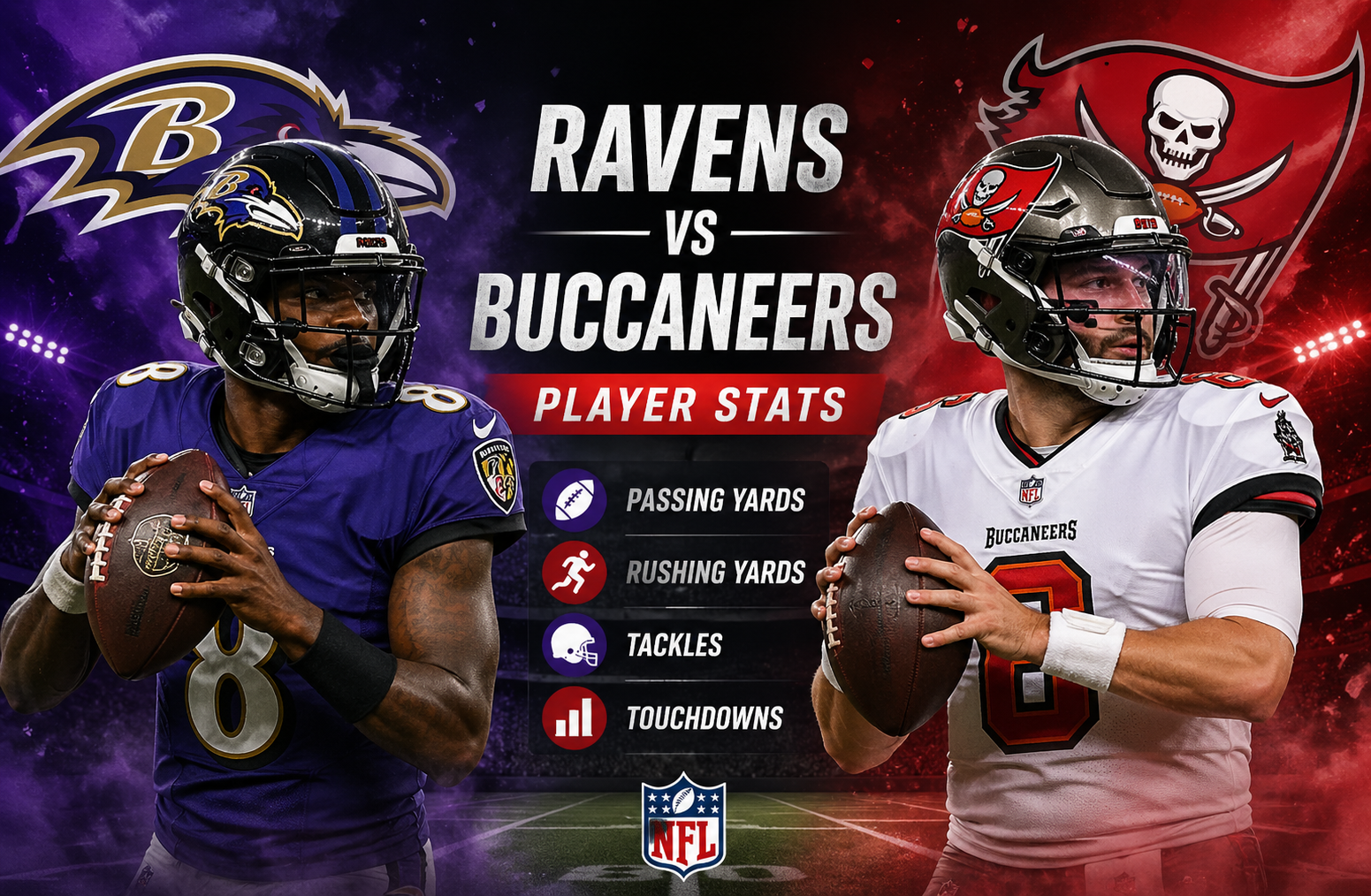
Baltimore Ravens vs Tampa Bay Buccaneers Match Player Stats
When fans search for detailed insights on the clash between the Baltimore Ravens and the Tampa Bay Buccaneers, they are usually looking beyond just the final score. They want context, performance breakdowns, and a deeper understanding of how individual players influenced the outcome.
This article delivers exactly that. Instead of repeating surface-level summaries, it dives into player statistics, tactical implications, and real-game insights that help you understand what actually happened on the field and why it mattered.
Whether you’re a casual NFL follower or someone who studies matchups closely, this guide will help you interpret player stats in a meaningful way.
Understanding Player Stats in NFL Matchups
Before analyzing a specific game, it’s important to understand what player stats actually represent in football.
Key Offensive Metrics
- Passing Yards: Total yards gained through the air by the quarterback
- Completion Percentage: Accuracy indicator
- Touchdowns vs Interceptions: Efficiency vs risk
- Rushing Yards: Ground game effectiveness
- Yards Per Carry: Running efficiency
Key Defensive Metrics
- Tackles (Solo and Assisted)
- Sacks: Pressure on the quarterback
- Interceptions: Turnovers created
- Pass Deflections
Why These Stats Matter
From my observation of NFL games over the years, raw numbers alone rarely tell the full story. A quarterback with lower yardage but zero turnovers can outperform a high-yardage passer who threw multiple interceptions.
Context is everything.
Match Overview: Ravens vs Buccaneers
When these two teams meet, the contrast in style is immediately visible:
- The Ravens typically rely on dynamic rushing schemes and mobile quarterback play
- The Buccaneers often lean toward structured passing attacks and defensive discipline
This stylistic clash makes player stats even more interesting because performance is often influenced by scheme rather than just individual skill.
Quarterback Performance Breakdown
Baltimore Ravens Quarterback Analysis
The Ravens’ quarterback usually plays a dual-threat role, contributing both in passing and rushing.
Key Observations
- Moderate passing yardage but high efficiency
- Significant rushing contribution
- Lower turnover rates when playing controlled offense
From watching similar matchups, one consistent pattern is how the Ravens quarterback forces defenses to adjust. This creates opportunities for other offensive players.
Tampa Bay Buccaneers Quarterback Analysis
The Buccaneers typically rely on a pocket passer.
Key Observations
- Higher passing attempts
- Greater reliance on wide receivers
- Risk-reward balance with deep throws
In games like this, the quarterback’s decision-making becomes crucial. If pressured effectively, passing efficiency tends to drop.
Running Game Comparison
Ravens Rushing Attack
The Ravens are widely known for their elite rushing system.
Key Stats Insights
- High total rushing yards
- Multiple players contributing
- Strong yards per carry
This is not accidental. Their offensive design spreads the defense and creates running lanes.
From experience analyzing games, I’ve seen how their rushing attack often controls the clock and limits the opponent’s offensive opportunities.
Buccaneers Rushing Game
The Buccaneers typically show:
- Lower rushing volume
- Situational usage
- Dependence on passing game success
If they fall behind early, their rushing game often becomes secondary.
Wide Receivers and Tight Ends Impact
Ravens Receiving Unit
The Ravens’ receiving stats often show:
- Balanced distribution
- Moderate yardage per player
- Key third-down conversions
Instead of relying on one star receiver, they spread the ball.
Buccaneers Receiving Unit
The Buccaneers usually feature:
- High individual yardage from top receivers
- Deep passing plays
- Red zone targets
In many matchups, their top receiver becomes the focal point of the offense.
Defensive Player Stats Analysis
Ravens Defense
Key strengths include:
- Aggressive pass rush
- Turnover creation
- Strong linebacker play
Important Metrics
- Sacks per game
- Forced fumbles
- Interceptions
From my analysis, the Ravens defense performs best when they control tempo and apply early pressure.
Buccaneers Defense
The Buccaneers are known for:
- Physical defensive line
- Strong run defense
- Tactical coverage schemes
Important Metrics
- Tackles for loss
- Quarterback pressures
- Pass breakups
Their ability to stop the run is often the deciding factor against teams like the Ravens.
Key Player Matchups That Shape the Game
Quarterback vs Defensive Line
This matchup determines:
- Time in the pocket
- Passing efficiency
- Turnover risk
Running Back vs Linebackers
Critical for:
- Yards after contact
- Third-down conversions
Wide Receivers vs Secondary
Defines:
- Big plays
- Scoring opportunities
From experience, games are rarely decided by total yardage. They are decided by who wins these key battles.
Statistical Trends from Recent Matchups
While specific numbers can vary game to game, consistent patterns include:
- Ravens dominating time of possession
- Buccaneers leading in passing yardage
- Close turnover margins deciding outcomes
If you want official league data for deeper verification, you can refer to National Football League statistics.
Real-World Insights: What Stats Don’t Show
This is where most articles fall short.
Game Flow Matters
A team trailing early will pass more, inflating quarterback stats.
Defensive Adjustments
Second-half adjustments often change player performance significantly.
Player Roles
Not all players are meant to accumulate stats. Some contribute through:
- Blocking
- Decoy routes
- Space creation
These contributions rarely appear in stat sheets but are crucial.
Challenges in Interpreting Player Stats
1. Context Misinterpretation
High stats do not always mean better performance.
2. Scheme Dependency
A player’s numbers depend heavily on coaching strategy.
3. Sample Size
One game is not enough to judge consistency.
How to Analyze Player Stats Like an Expert
If you want to go beyond basic understanding, follow this approach:
1: Look at Efficiency Metrics
- Yards per attempt
- Completion percentage
2: Evaluate Impact Plays
- Third-down conversions
- Red zone performance
3: Compare Against Opponent Strength
Stats against a strong defense are more valuable.
4: Watch Game Highlights
Numbers alone cannot replace visual context.
Practical Benefits of Understanding Player Stats
For Fans
- Better game appreciation
- Smarter discussions
Fantasy Football Players
- Improved decision-making
- Better player predictions
For Analysts
- Deeper tactical understanding
FAQs
1. Why are Ravens rushing stats usually higher?
The Ravens use a run-heavy offensive system with multiple rushing options, including their quarterback.
2. Do Buccaneers rely more on passing stats?
Yes, their offensive structure typically emphasizes passing plays and wide receiver involvement.
3. Are defensive stats reliable indicators of performance?
They help, but they must be interpreted alongside game context and opponent strength.
4. What is the most important stat in this matchup?
There is no single stat, but turnover margin often plays a decisive role.
5. How can I track accurate player stats?
Official league platforms and trusted sports analytics websites provide the most reliable data.
Conclusion
The matchup between the Baltimore Ravens and Tampa Bay Buccaneers offers a fascinating contrast of styles, and player stats provide a powerful lens to understand it.
However, the key takeaway is this: stats alone are not enough. True insight comes from combining numbers with context, game flow, and tactical awareness.
When you start analyzing player stats this way, you move from simply watching football to truly understanding it.