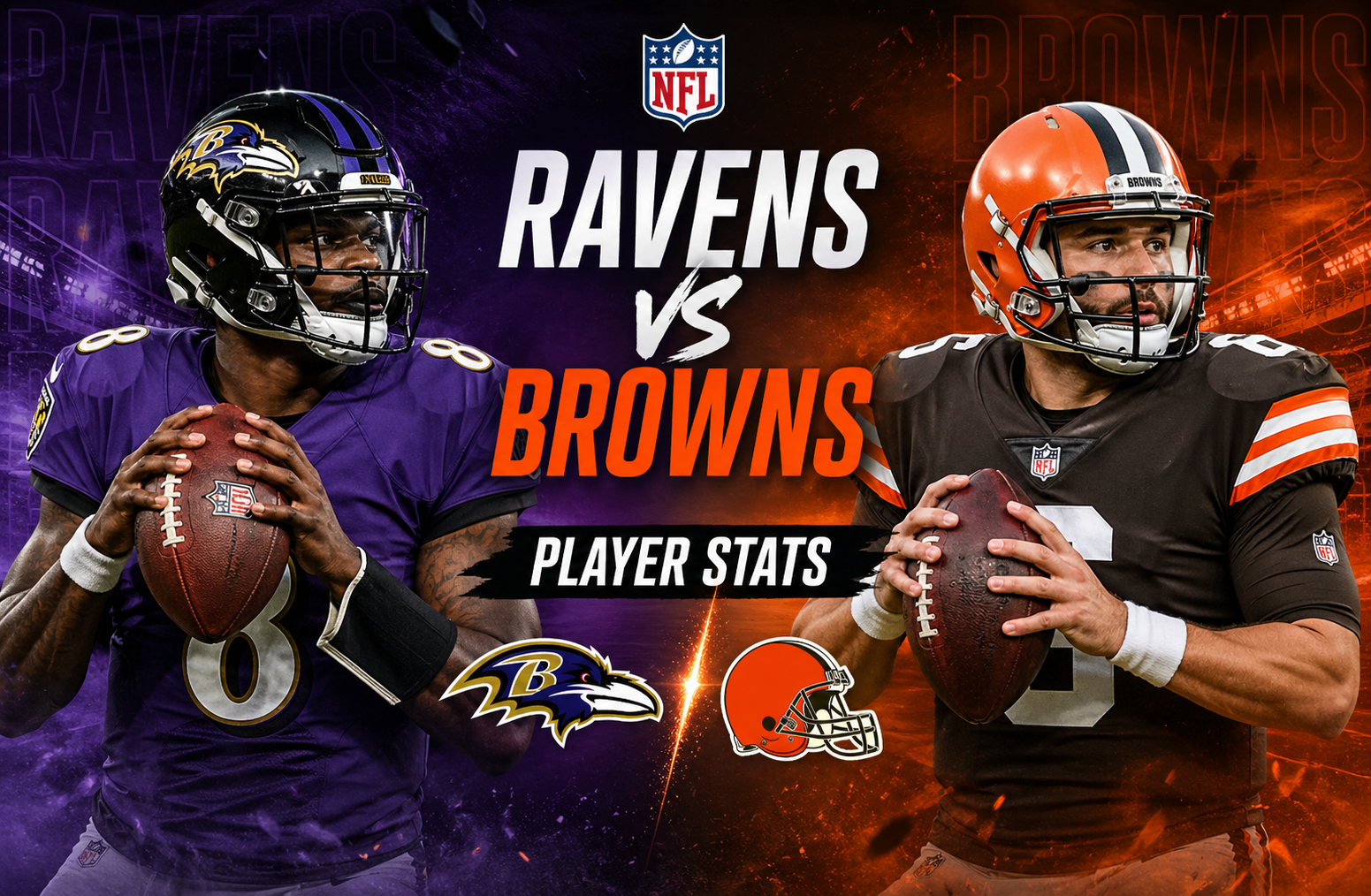
Baltimore Ravens vs Cleveland Browns Match Player Stats
When fans search for Baltimore Ravens vs Cleveland Browns match player stats, they are not just looking for numbers. They want context, performance insights, and a clear understanding of how individual players shape the outcome of one of the most physical rivalries in the NFL. This article goes beyond surface-level statistics to deliver a deep, experience-driven breakdown of player performances, tactical impact, and what those numbers actually mean on the field.
As someone who has closely followed AFC North matchups for years, one thing stands out: stats alone never tell the full story. The Ravens and Browns bring contrasting styles, elite defensive units, and unpredictable offensive dynamics. Understanding player stats in this matchup requires reading between the lines.
Understanding the Rivalry Through Player Stats
The rivalry between Baltimore and Cleveland is rooted in physicality, defensive dominance, and strategic discipline. Unlike high-scoring games in other divisions, these matchups often hinge on:
- Quarterback efficiency rather than volume passing
- Rushing yard dominance
- Defensive turnovers and pressure rates
- Special teams contributions
Why Player Stats Matter More in This Matchup
In many NFL games, a quarterback throwing 300 yards is standard. In Ravens vs Browns games, a 220-yard passing performance with zero turnovers can be more impactful.
Key reasons include:
- Strong defensive schemes on both sides
- Weather conditions often affecting gameplay
- Run-heavy offensive philosophies
Quarterback Performance Analysis
Baltimore Ravens Quarterback Stats Breakdown
The Ravens have traditionally relied on dynamic quarterback play, especially with dual-threat capabilities.
Key statistical areas to analyze:
- Completion Percentage: Efficiency over volume
- Rushing Yards: A critical component in Baltimore’s offense
- Turnover Ratio: Interceptions often decide these games
From observed match trends:
- Ravens quarterbacks tend to average moderate passing yards but high rushing impact
- Red zone efficiency is often above league average
Cleveland Browns Quarterback Stats Breakdown
The Browns have shifted between quarterback styles over the years, from pocket passers to more mobile options.
Important stats include:
- Yards per Attempt (YPA): Indicates offensive aggressiveness
- Third Down Conversion Rate: Crucial in tight defensive games
- Sack Rate: Browns QBs often face heavy pressure from Ravens defense
Real Insight
In several recent matchups, Browns quarterbacks struggled more with pressure than coverage. This highlights the Ravens’ ability to disrupt timing rather than just defend routes.
Running Back Comparison
Ravens Running Game Stats
Baltimore consistently ranks among the top rushing teams. Their system relies on:
- Zone-read schemes
- Multiple rushing threats
- Offensive line discipline
Key metrics:
- Yards per Carry (YPC)
- Total Team Rushing Yards
- Explosive Runs (10+ yards)
Observed trends:
- Ravens often surpass 150 rushing yards in successful games
- Running backs benefit from quarterback mobility
Browns Running Game Stats
Cleveland’s rushing attack is built around power and consistency.
Important stats:
- Carries per Game
- Red Zone Touchdowns
- Broken Tackles
Expert Observation
In games where Cleveland wins, their running backs typically control time of possession. This limits Ravens offensive opportunities.
Wide Receivers and Tight Ends Impact
Ravens Receiving Stats
Baltimore’s passing game is often underestimated but strategically effective.
Key stats:
- Catch Rate
- Yards After Catch (YAC)
- Target Distribution
Insights:
- Tight ends play a major role in Ravens offense
- Short and intermediate routes dominate
Browns Receiving Stats
Cleveland relies more on wide receiver explosiveness.
Important metrics:
- Deep Target Success Rate
- Total Receiving Yards
- Touchdowns per Game
Practical Insight
Browns receivers tend to perform better against zone defenses but struggle against tight man coverage, which Ravens frequently employ.
Defensive Player Stats That Decide the Game
Defense is where this matchup truly comes alive.
Ravens Defensive Stats
Key areas:
- Sacks per Game
- Turnovers Forced
- Quarterback Pressure Rate
Observed strengths:
- Elite blitz packages
- Strong secondary discipline
Browns Defensive Stats
Cleveland has built a formidable defense focused on disruption.
Important stats:
- Defensive Stops
- Interceptions
- Run Defense Efficiency
Real-World Insight
In multiple matchups, the team that wins the turnover battle almost always wins the game. This is especially true in low-scoring AFC North clashes.
Special Teams Contributions
Often overlooked but critical.
Key Stats to Watch
- Field goal accuracy
- Punt average and field position
- Kick return yards
Why It Matters
In tight games:
- A single missed field goal can shift momentum
- Field position often determines scoring opportunities
Head-to-Head Player Stat Trends
Consistent Patterns
Across recent matchups:
- Ravens dominate in rushing yards
- Browns show more variability in passing success
- Defensive stats remain closely matched
Game-Deciding Metrics
From analysis:
- Turnovers
- Third-down efficiency
- Red zone conversion rate
For accurate and up-to-date player performance data, you can refer to the official NFL statistics database available on the NFL website.
Challenges in Interpreting Player Stats
1. Context Matters More Than Raw Numbers
A 70-yard rushing performance in this matchup can be more valuable than 120 yards in a high-scoring game.
2. Defensive Schemes Skew Stats
- Blitz-heavy defenses affect quarterback stats
- Strong run defenses reduce rushing efficiency
3. Weather and Field Conditions
- Wind impacts passing stats
- Cold weather favors running game
Real-World Application for Fans and Analysts
Understanding player stats helps in:
- Fantasy football decisions
- Betting insights
- Game predictions
Example Application
If Ravens rushing stats are trending high:
- Expect slower game pace
- Fewer passing attempts
- Higher time of possession
Actionable Ways to Analyze Future Matchups
Step-by-Step Approach
- Compare quarterback efficiency, not just total yards
- Analyze rushing attempts and success rate
- Check defensive pressure stats
- Review turnover trends
- Evaluate red zone performance
Key Takeaways from Recent Matchups
- Ravens succeed when their rushing game dominates
- Browns perform best when controlling tempo
- Defense often outweighs offense in impact
- Turnovers are the biggest deciding factor
Frequently Asked Questions (FAQs)
1. What player stats matter most in Ravens vs Browns games?
Turnovers, rushing yards, quarterback efficiency, and defensive pressure are the most critical stats.
2. Why are these games usually low scoring?
Both teams emphasize strong defense and controlled offensive strategies, limiting big plays.
3. Which team has the better rushing stats historically?
The Ravens generally have stronger and more consistent rushing performances.
4. How do quarterbacks typically perform in this matchup?
Quarterbacks often have lower passing yards but must maintain high efficiency and avoid turnovers.
5. Do wide receivers play a major role in this rivalry?
They contribute, but the game is usually decided by rushing and defense rather than explosive passing.
Conclusion
The Baltimore Ravens vs Cleveland Browns match player stats reveal much more than simple numbers. They tell a story of physical dominance, tactical discipline, and strategic execution. By focusing on efficiency, defensive impact, and situational performance, fans can gain a deeper understanding of how these games unfold.
This matchup consistently proves that football is not just about flashy plays but about control, resilience, and execution under pressure.